How Radiant Barrier Works
A hot roof does more than warm the attic air. It also radiates energy toward cooler attic surfaces. Ra-flect reduces that radiant exchange when at least one of its reflective faces borders an air space.
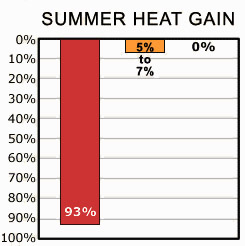
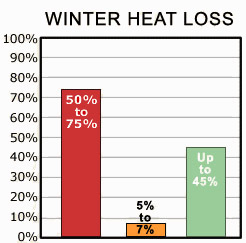
What happens in a vented attic
1. The roof heats up
Solar energy warms the roofing and roof deck. Heat then conducts through the roof assembly.
2. The deck radiates heat
The underside of the hot deck exchanges radiant energy with cooler surfaces across the attic.
3. Ra-flect reduces exchange
The low-emittance surface limits radiant heat transfer across the adjacent air space.
Double-sided means easier orientation: Either side of Ra-flect can border the air space. The installation does not have a required front or back, but sandwiching both faces tightly between other materials removes the air space needed for radiant performance.
The installation controls the outcome
- Preserve soffit, ridge, and other required ventilation paths.
- Follow the installation method designed for the roof, attic, wall, ceiling, floor, or crawl space.
- Keep required clearances from flues, chimneys, heat-producing equipment, and electrical hazards.
- Choose Laser Perforated (LP) unless the assembly intentionally requires Vapor Barrier (VB).
- Keep the reflective faces reasonably clean; dust on an exposed horizontal face can reduce performance.
See the method before buying
Start with the installation location and framing spacing. That will usually determine the correct product family and the easiest roll width.
Technical background: U.S. Department of Energy, Radiant Barriers.